




Life Sciences Content Solutions for Global Scale

MedTech, Pharma, Biotech and CRO teams operate under regulatory scrutiny in every market they enter. From clinical development to post-market surveillance, we ensure your documentation stays accurate, traceable and on time.

Medpace logo
Lilly logo
novo nordisc logo
Abbott logo
ipsen logo
BD logo
Novartis logo
Pierre Fabre logo
Johnson & Johnson logo
Medpace logo
Lilly logo
novo nordisc logo
Abbott logo
ipsen logo
BD logo
Novartis logo
Pierre Fabre logo
Johnson & Johnson logo
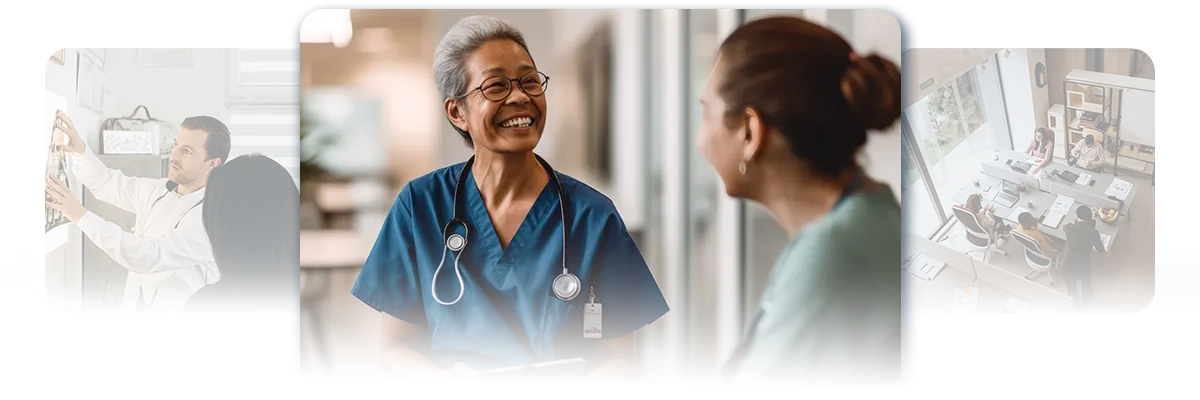
collage of smiling medical workers

Why Multilingual Precision Matters in Life Sciences

Regulatory scrutiny is increasing. Submission timelines are compressing. Documentation volumes keep growing across EMA, FDA, MDR, IVDR and beyond. When multilingual content is not controlled, the consequences go beyond operations. Acolad brings structured content control to every stage of the product lifecycle.

Ranked #1
CSA Research, Life Sciences

500+ language pairs
All major regulated markets

30+ Years
Life sciences expertise

End-to-End Coverage

Life Sciences Translation Services Across the Lifecycle

Life Sciences content moves through distinct stages, each with its own risks, audiences and operational pressures. Acolad covers all under one operating model.
Clinical Trial Translation

Keep Studies on Schedule

For Clinical Operations, Clinical Affairs and COA teams across MedTech, Pharma and CROs

Clinical documentation delays push back study timelines and regulatory windows. Trial teams need content that is precise, coordinated, and approved at site level in every required language.
  • Study protocols and ICFs  
  • Investigator materials and site communications
  • eCOA and ePRO content
Regulatory Translation

Secure Market Approval

For Regulatory Affairs, Labeling, QA and Compliance teams

A submission gets your product to market. Consistent post-approval content is what keeps it there. A single inconsistency in a dossier can trigger a deficiency notice or compromise market access in a key region.
  • MDR and IVDR technical documentation
  • Submission dossiers across EMA, FDA, PMDA, NMPA
  • Labeling that holds across markets
Post-Market Translation

Scale with Confidence

For Pharmacovigilance, Drug Safety, PMS and Vigilance teams 

Post-market obligations move on regulator timelines, not yours. Safety reporting, complaint handling and vigilance documentation must be processed at scale, in every required language, with no break in version history. 
  • PSURs and DSURs 
  • ICSRs and SUSAR narratives 
  • PMS reports for Medical Devices 

Quality Built Into Every Workflow

Every document is traceable, versioned and review-documented. Your team walks into any audit with a complete, defensible paper trail.
ISO certified, GDPR compliant, SOC 2

Certified Translation Quality and Compliance Standards

ISO 9001 • ISO 17100 • ISO 13485 • ISO 18587 • ISO 27001 • 21 CFR Part 11 readiness

Regulatory awareness

across GxP, MDR and IVDR frameworks 

Validated, SOP-driven workflows

for every regulated program

Dedicated Life Sciences specialists

on every regulated program 

Compliance-trained project managers

supporting FDA, EMA and global regulatory workflows 
Life Sciences Solutions

Tailored for Your Industry


medtech worker at the computer

Multilingual Compliance for Medical Devices

MedTech organizations under MDR and IVDR face mounting pressure to keep IFUs accurate, labels consistent and technical files defensible across every market. Structured multilingual workflows built around version control and regulatory traceability keep global launches on schedule. 
  •  MDR readiness
  •  IFU accuracy at scale
  •  Global product launch coordination
  •  Controlled version management

female doctor with glasses smiling during meeting

Regulatory Localization for Pharmaceutical Teams

Pharmaceutical teams expanding across regions cannot afford label discrepancies or submission gaps. Governance-driven processes keep dossiers harmonized and regulatory alignment maintained across markets. 
  •  Submission harmonization
  •  Label consistency
  •  Multi-market regulatory alignment
  •  Scalable pharmacovigilance support

man working on multilingual digital study

Multilingual Support for Clinical Trials and Site Operations

CROs running multi-country studies face a documentation challenge that compounds with every new site. Structured coordination and centralized content control keep study timelines intact, regardless of volume or geographic scope.
  •  Multi-country coordination
  •  High-volume documentation control
  •  System integration
  •  Operational scalability
doctor holding tablet speaking with patient

Partner with our language specialists to simplify complex trials and ensure project quality.

colorful portraits of people surrounding the Acolad logo

Control Global Complexity with Confidence

From clinical development to post-market activities, ensure your documentation and communication are structured, compliant and ready across markets.

Related Resources

Frequently Asked Questions
What is linguistic validation in clinical trials?

Linguistic validation is the process of confirming that a translated clinical outcome assessment measures the same concept as the source, in the target language and culture. It combines forward and back translation, reconciliation, cognitive debriefing with patients, and a documented audit trail. Regulators and instrument developers expect this evidence when patient-reported data supports a study endpoint.

What are the translation requirements under EU MDR and IVDR?

 EU MDR 2017/745 and IVDR 2017/746 require instructions for use, labeling and the summary of safety and clinical performance to be available in the official languages of each member state where the device is placed on the market. Requirements vary by country and device class. Technical documentation must stay consistent and version-controlled across every language. 

How are clinical outcome assessments translated for multi-country trials?

 A clinical outcome assessment, or COA, captures how a patient feels or functions during a trial. Translating one requires a license from the instrument developer, linguistic validation for each language and country, and screen testing when the questionnaire is delivered on an eCOA device. Platform migration is validated separately from the translation itself. 

How are product labels kept consistent across regulatory markets?

Label consistency depends on one approved terminology source, controlled versioning and a documented review step before each market submission. Local labeling requirements differ by authority, so national variations must remain traceable to the approved master. Discrepancies between language versions are a frequent cause of deficiency notices and launch delays.

Is machine translation allowed in regulated Life Sciences content?

No regulation bans machine translation outright, but regulated content must be accurate, traceable and reviewed by a qualified human. In practice it is used with post-editing under ISO 18587, with defined human oversight and a documented audit trail. The risk level of each document type determines how much review it receives. 

How is pharmacovigilance documentation translated on regulatory timelines?

Safety reporting runs on fixed regulatory clocks. Individual case safety reports are due within 7 or 15 calendar days depending on severity, and periodic safety update reports follow their own cycle from the data lock point. Translation has to fit inside those windows without breaking version history or the audit trail.