



OPI (Over-the-Phone Interpreting) and VRI (Video Remote Interpreting) are both remote interpreting formats with a qualified human interpreter. The difference is the channel: OPI is audio only, VRI adds live video. That difference decides which use cases each format fits, and the choice has a direct impact on quality, compliance, and cost per interaction.
This article compares the two formats by use case, with a decision matrix to help you understand when each one is the right fit for healthcare, legal, HR, and customer support contexts.
OPI and VRI Explained
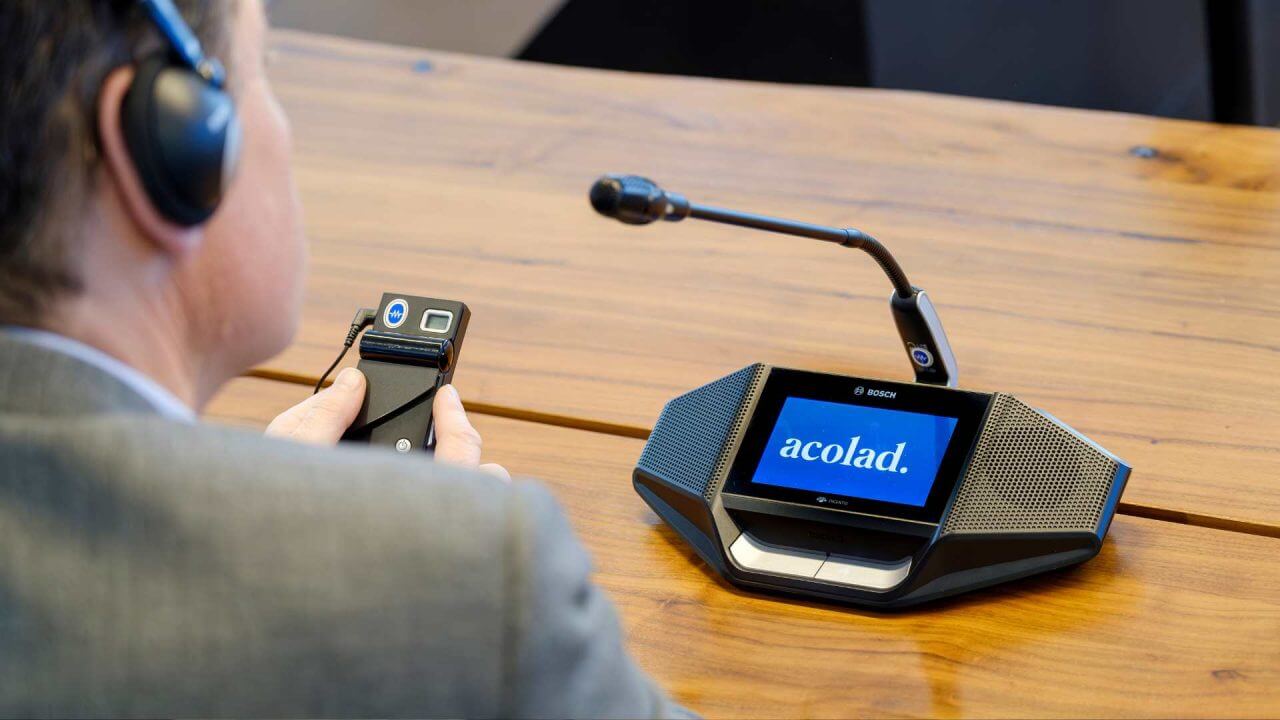
Over-the-Phone Interpreting (OPI) connects a participant to a qualified interpreter by phone, on demand or scheduled. Connection is fast, often within seconds for common languages, and the service runs around the clock. OPI is audio only and handles spoken languages. Sign language is not supported.
Video Remote Interpreting (VRI) connects participants to a qualified interpreter through a secure video link, on a tablet, laptop, or dedicated unit. The interpreter sees and is seen. VRI supports both spoken languages and sign language. It requires a stable internet connection and a camera-equipped device on each side.
Which Interpreting Format Fits Each Use Case
The choice depends on whether visual context affects the interaction.
OPI fits audio-sufficient interactions where speed matters.
-
Customer support and contact centers, where the agent and caller are already on the phone.
-
HR helplines and routine queries on payroll, leave, or basic policy.
-
Public sector helplines, non-emergency police lines, and social services intake.
-
Healthcare phone-based interactions like appointment scheduling, prescription refills, and post-discharge follow-ups.
In these cases, audio carries the full interaction and connection time is the operational metric.
VRI fits interactions where seeing the interpreter changes the quality of the exchange.
-
Sign language interpreting in any context, since sign language cannot be delivered by audio.
-
Clinical consultations where a patient demonstrates pain, a clinician reads physical distress signals, or an informed consent conversation depends on visual context.
-
Legal proceedings outside sworn testimony, including client interviews, hearings, and mediation sessions.
-
Sensitive HR interactions like disciplinary meetings, return-to-work interviews, or redundancy consultations.
OPI vs VRI Decision Matrix
| Scenario | Recommended Format |
| Customer support call | OPI |
| Healthcare appointment scheduling | OPI |
| Clinical consultation, exam, informed consent | VRI |
| Sign language, any context | VRI |
| HR routine query | OPI |
| HR disciplinary or sensitive meeting | VRI |
| Legal hearing outside sworn testimony | VRI or on-site |
| Public helpline | OPI |
| Sworn testimony, asylum interview | On-site |
Where AI Fits, and What to Look For in a Provider
AI-assisted formats exist alongside human OPI and VRI, but the boundary is clear. Automated OPI can handle some low-risk corporate or call-center interactions, with a working language constraint and an automatic fall-back to a human interpreter when complexity rises. It is not appropriate for healthcare, justice, asylum, or other regulated contexts, where most client contracts and many local rules prohibit machine interpreting. AI is a governed option for narrow, low-stakes use cases, applied with disclosure and human oversight. Human OPI and VRI remain the default for everything that touches compliance, sensitive data, or liability.
Once the format is chosen, the provider model matters as much as the format itself. Three points to check:
Single accountability across the chain. Some setups split the platform, the interpreter pool, and support across separate vendors. That works on paper and breaks under pressure. A single point of accountability for technology, interpreters, quality assurance, and support reduces escalation paths.
Centralized usage reporting. At enterprise volume, the operational metric is visibility across sites, languages, and teams, not cost per minute. Reporting that tracks demand patterns, language coverage gaps, and quality flags is the difference between a service and a contract you cannot manage.
Fit-for-purpose governance. Providers that route every interaction through the same model will either over-engineer low-stakes ones or under-protect high-stakes ones. Look for a provider that distinguishes risk levels and applies the right format and the right oversight to each.
VRI and OPI continue to expand, although on-site interpreting has seen a resurgence in some public sectors, according to the 2025 Nimdzi Interpreting Index. Both remote formats have become the operational default for repeatable volume, with on-site retained for higher-stakes regulated contexts.
Choose the Format that Fits Your Team
If you are setting up remote interpreting for healthcare, legal, HR, or customer support operations, the format choice should follow your interaction types, not the other way around. See how to choose between on-site, OPI, and VRI, or talk to an Acolad interpreting expert for a recommendation based on your specific use cases.
Key Takeaways
-
OPI fits high-volume, audio-sufficient interactions where speed of connection is the constraint.
-
VRI fits interactions where visual context affects quality, including sign language, clinical consultations, sensitive HR exchanges, and most legal proceedings outside sworn testimony.
-
Both run around the clock with qualified human interpreters and can be deployed across multiple sites with central reporting.
-
Most organizations end up using a mix, matching format to interaction type.















.jpg)