




Conference and business interpreting are often confused, but they are two different services.
Conference interpreting covers large multilingual events with simultaneous delivery from a booth or a remote platform.
Business interpreting covers meetings, negotiations, and small-group discussions with consecutive or liaison delivery. The setup, the interpreter profile, and the cost structure are not the same. Picking the wrong format usually shows up on the day of the meeting, when it is too late to fix.
This article explains the difference between the two, the typical use cases for each, and a short self-check to identify which one fits your situation.
What Is Conference Interpreting?
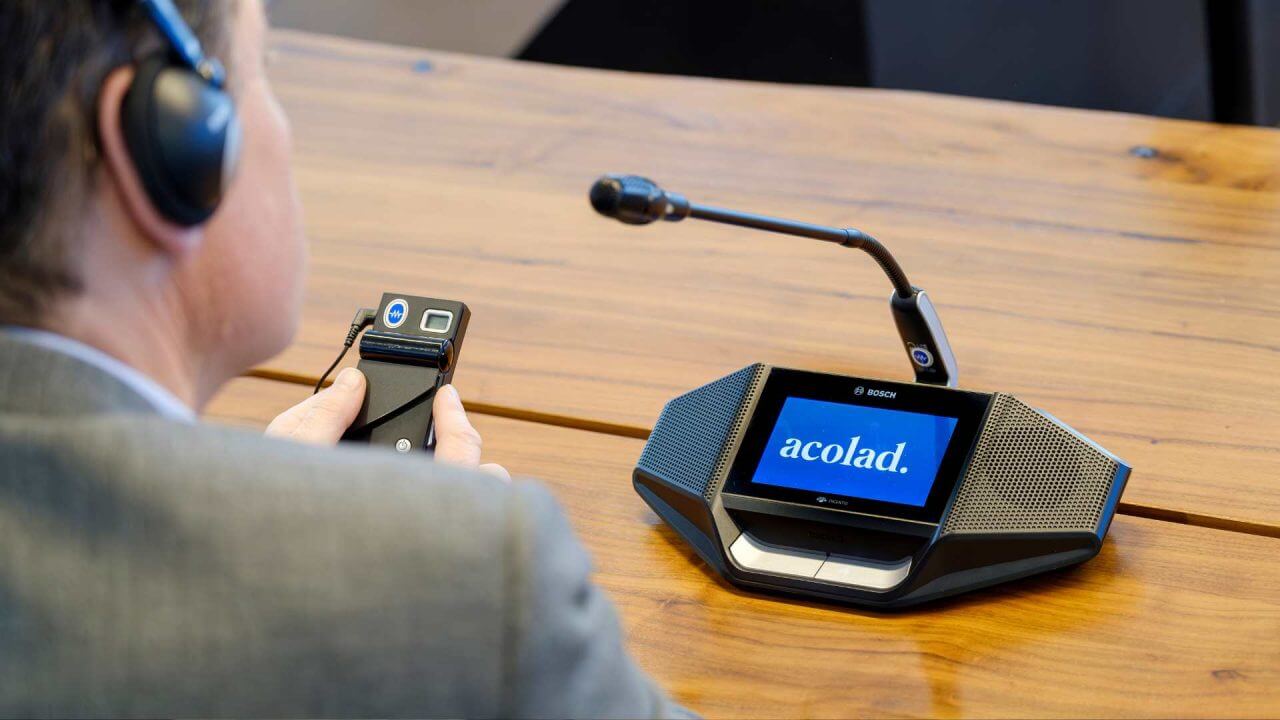
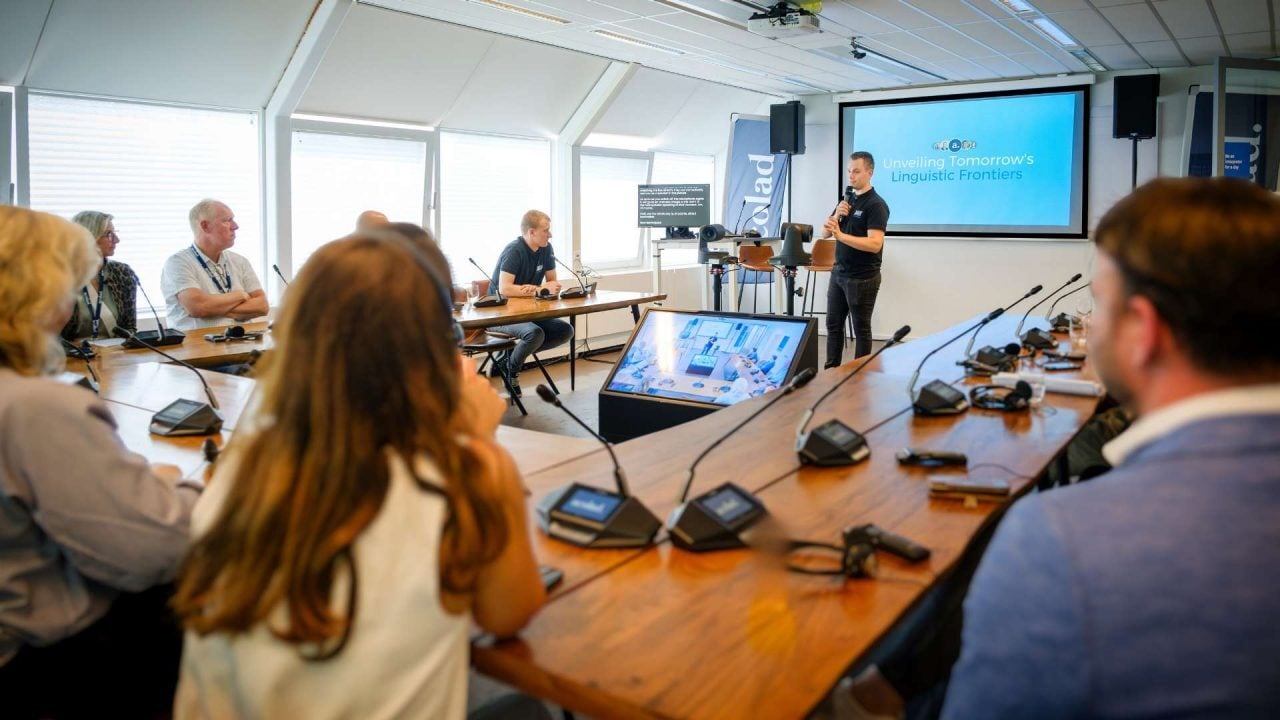
Conference interpreting is the service used at international conferences, summits, congresses, and large multilingual events. The interpreter renders the speech into the target language in real time, while the speaker is still talking. This is called simultaneous interpreting.
The setup requires specific equipment: a soundproof booth at the venue, a console, headsets, and receivers for the audience. For remote or hybrid formats, a dedicated platform replaces the physical booth, and delegates follow the interpretation on their own device. Usually, multiple interpreters per language pair work in rotation every twenty to thirty minutes, because the cognitive load makes longer shifts impossible to sustain quality.
Conference interpreters are specialists. Most hold a postgraduate degree in conference interpreting and work in defined language combinations. They prepare extensively before each event using the agenda, speaker bios, slides, and any technical glossary the organizer can share.
Typical use cases include: international policy summits, medical or scientific congresses, multilingual investor conferences, large corporate town halls with multiple language streams, sector forums, and institutional press conferences.
What Is Business Interpreting?
Business interpreting, sometimes called liaison or bilateral interpreting, is the service used in meetings and exchanges where a small number of participants need to communicate across languages. The interpreter waits for the speaker to finish a sentence or short passage, then renders it into the target language. This is called consecutive interpreting.
Usually, the setup is light. No booth, no console, no receivers. The interpreter sits in the room with the participants, or joins by video or phone for remote interactions. Sessions can be one to one or in small groups. A single interpreter usually covers a meeting of up to a few hours, depending on intensity.
Business interpreters work across a wide range of contexts. Their profile is broader than conference interpreters. Many specialize in a sector such as legal, medical, or commercial negotiation, and they may be sworn or certified depending on the jurisdiction.
Typical use cases include: bilateral business negotiations, supplier or partner meetings, factory or site visits, due diligence sessions, HR interviews, executive briefings, and commercial pitches with international counterparts.
Side-by-Side Comparison
| Conference Interpreting | Business Interpreting | |
| Mode | Simultaneous (real-time) | Consecutive (sentence by sentence) |
| Setup | Booth, console, receivers, or dedicated remote platform | None or minimal |
| Number | At least two per language pair | Usually one per language pair |
| Audience size | Large, multilingual | Small groups or one-to-one |
| Typical duration | Half, full, or multi-day events | Meeting-length, often a few hours |
| Lead time | Weeks to months | Days to weeks |
| Cost driver | Interpreter team plus equipment or platform | Interpreter time |
How to Know Which One You Need
Three questions usually settle the choice.
How many people will be listening to the interpretation? If the answer is a small group around a table, business interpreting fits. If the answer is a room full of delegates, an audience following multiple language channels, or a hybrid event with remote attendees in several languages, you are looking at conference interpreting.
Can the meeting double in length? Consecutive interpreting roughly doubles the speaking time, because the speaker and the interpreter take turns. That works for a two-hour negotiation. It does not work for a six-hour conference agenda. If the schedule is tight or the format is broadcast-style, simultaneous is the only option, and you need conference interpreting.
Will there be more than two working languages? Multiple language pairs in the same room push you toward conference interpreting almost by default. Each language requires its own booth or remote channel, and coordinating consecutive across three or four languages is not practical.
Key Takeaways
-
Choose conference interpreting when you need real-time multilingual access for a large audience, multiple language channels, or a schedule that cannot run over.
-
Choose business interpreting for small meetings, negotiations, site visits, and other exchanges where participants can pause and speak in shorter segments.
-
The delivery mode shapes the setup and budget: conference interpreting usually needs simultaneous delivery, equipment, and a team of interpreters, while business interpreting usually needs one interpreter and little or no technical setup.
-
The fastest way to avoid a mismatch is to check three factors before booking: audience size, time sensitivity, and the number of working languages.













.jpg)