



Simultaneous and consecutive interpreting are the two primary modes of spoken language interpretation.
Simultaneous interpreting delivers real-time interpretation as the speaker talks.
Consecutive interpreting follows each speaker pause with the interpreter’s rendition.
Choosing the wrong mode adds time, disrupts flow, or fails the audience. This article explains the difference and when each applies.
What Is Simultaneous Interpreting?
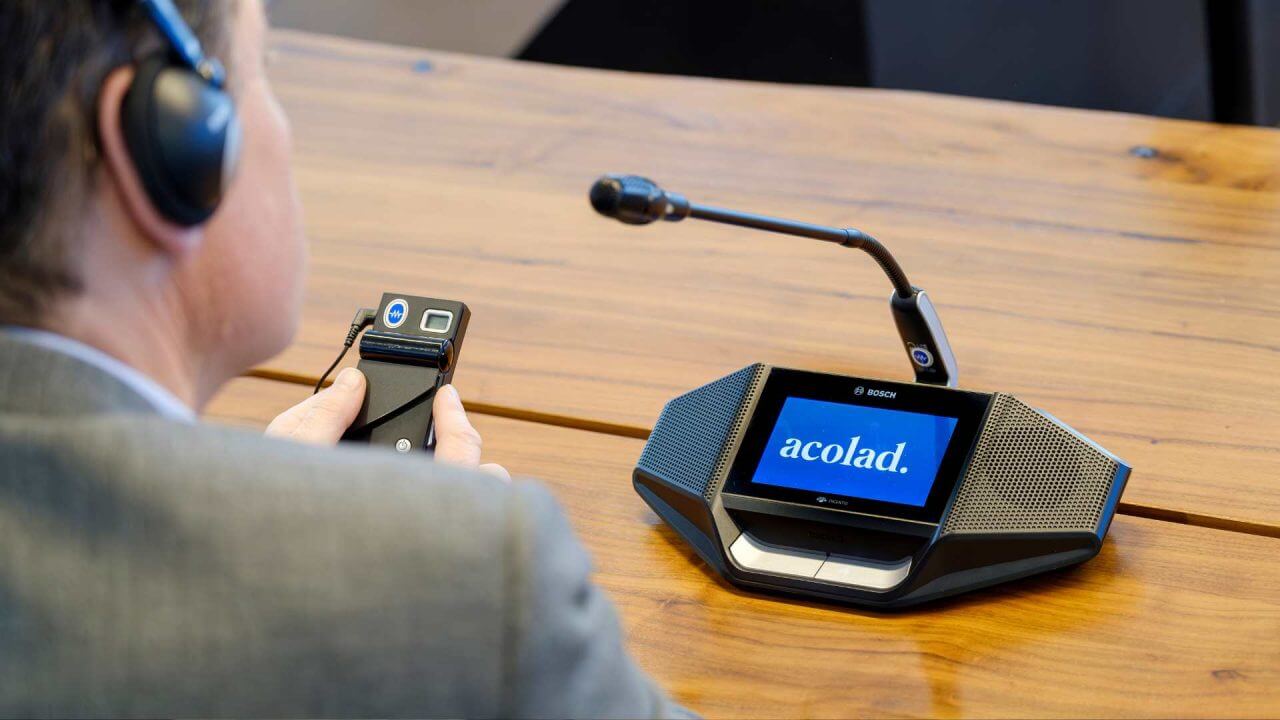
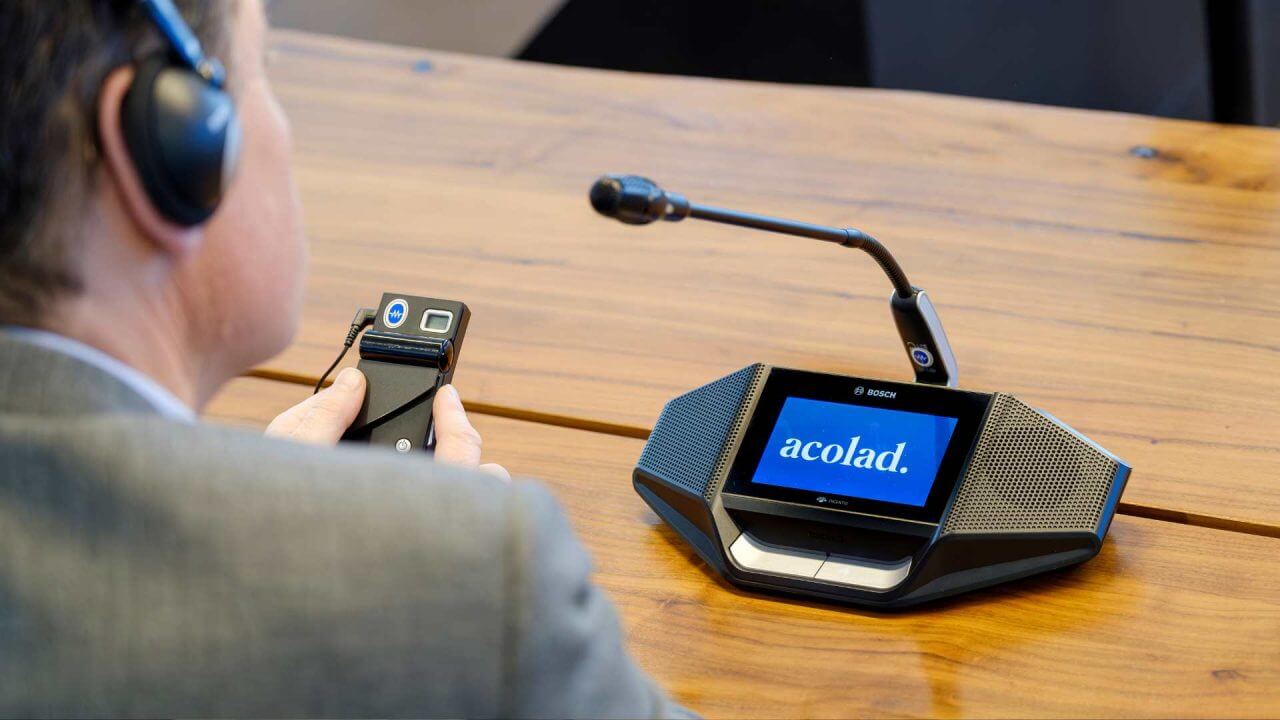
Simultaneous interpreting is the delivery of interpretation in real time, while the speaker is still talking. The interpreter works from a soundproof booth, listens through headphones, and speaks into a microphone. The audience receives the interpretation via a receiver on their selected language channel.
This mode requires two interpreters per language pair, rotating every 20 to 30 minutes to manage cognitive load. It’s the standard for large international conferences, multilateral negotiations, and events where multiple language channels run in parallel.
Simultaneous interpreting is also delivered remotely through Remote Simultaneous Interpreting (RSI): interpreters connect from a remote hub or home setup, and participants receive audio through a platform or app. RSI has expanded access to simultaneous interpreting for hybrid and fully virtual events.
What Is Consecutive Interpreting?
Consecutive interpreting is the delivery of interpretation after the speaker has finished a passage, typically one to five minutes. The interpreter listens, takes notes, and renders the message in the target language once the speaker pauses.
This mode doesn’t require booth equipment or receiver hardware. It suits smaller, interactive settings: bilateral meetings, legal depositions, medical consultations, site visits, and press briefings with limited language pairs.
The trade-off is time. A consecutive session roughly doubles in duration because each statement is delivered twice. For agenda-driven events with many speakers or tight scheduling, this becomes a hard constraint.
How to Choose Between Simultaneous and Consecutive Interpreting?
The decision comes down to three factors: audience size, session format, and time.
If you’re running a conference, summit, or town hall with more than 30 attendees and more than two language pairs, simultaneous interpreting is the practical choice. Consecutive at that scale creates sessions that are unmanageable in length and difficult for audiences to follow.
If you’re managing a small delegation meeting, a legal proceeding, or a field visit where conversation is genuinely bilateral and pace matters less than precision, consecutive interpreting fits better. There’s no equipment overhead, and the interpreter can ask for clarification in a way that simultaneous mode doesn’t allow.
When the setting is a hybrid event with both in-room and remote participants, RSI delivers simultaneous interpreting without the full booth infrastructure, which makes it the default for distributed multilingual events.
What About On-Site vs Remote Delivery?
The choice between simultaneous and consecutive is separate from the question of whether interpreting is delivered on-site or remotely. Both modes can be delivered in person. Simultaneous interpreting can also be delivered remotely via RSI platforms. Consecutive is rarely delivered remotely because the natural pauses and note-taking rhythm are harder to manage across a video connection.
For on-site events where physical presence, protocol, and interaction dynamics matter, on-site delivery with a managed service provider remains the standard. At COP30, Acolad delivered 885 interpreting sessions over 11 days as an example of what managed simultaneous interpreting looks like at scale.
Key Takeaways
-
Simultaneous interpreting runs in real time via booth and receivers. It’s the standard for conferences, multilateral events, and sessions with multiple language pairs.
-
Consecutive interpreting follows each speaker pause. It fits smaller, bilateral settings where precision matters more than pace.
-
Simultaneous interpreting roughly halves session time compared to consecutive. For events with tight schedules and large audiences, this is a hard practical constraint.
-
RSI delivers simultaneous interpreting remotely, without full booth infrastructure, and is now the default for hybrid and virtual multilingual events.
-
If you’re unsure which mode applies to your situation, the right question isn’t the mode. It’s the setting, audience size, and number of language pairs.















.jpg)