




Running a multilingual meeting doesn't always mean booking an interpreter, and not every meeting can run on AI. This guide shows you how to tell the difference. The rule is simple: match the setup to the stakes. AI interpreting handles internal, low-risk sessions on demand. Regulated or high-stakes meetings still call for a qualified human interpreter.
What a Multilingual Meeting Really Is
A multilingual meeting is any meeting where participants speak different languages and need real-time understanding. Three setups exist today: human interpreters, AI interpreting platforms, and hybrid setups that combine both.
The Framing Problem
Most multilingual meeting failures aren't tech failures. They're framing failures. Teams default to one setup for every meeting type, when the answer is to match the setup to the stakes. Booking a qualified interpreter for a 30-minute internal sync wastes budget. Using an unsupervised auto-translate tool for a regulated conversation creates a compliance risk. The decision isn't AI versus human. It's which setup fits this specific meeting.
How to Make Your Meeting Multilingual: Three Setups
Pick by stakes, not by preference.
| Setup | Best for | How it works | Connection / languages |
|---|---|---|---|
| Human interpreters | Regulated, high-stakes, or sensitive meetings | On-site, OPI, or VRI via vetted domain-certified interpreters | Under 60 seconds for OPI/VRI. 250+ languages. |
| AI interpreting | Internal, low-stakes, recurring meetings | Real-time voice and live captions via a platform, integrated with conferencing tools | Immediate, no pre-booking. 80+ languages. |
| Hybrid | Mixed meeting portfolios at scale | AI as default, with a managed human interpreter when a meeting requires one | Immediate for AI. Seconds for human. 80+ AI / 250+ human. |
Two definitions to keep in mind:
OPI (Over-the-Phone Interpreting) is remote interpreting via phone, suited to quick or urgent multilingual conversations.
VRI (Video Remote Interpreting) is remote interpreting via video, suited to more complex or visual remote interactions. For a deeper view on choosing between on-site, OPI, and VRI across all interpreting use cases, see our guide on how to choose your interpreting approach.
When You Can Run a Multilingual Meeting Without Interpreters
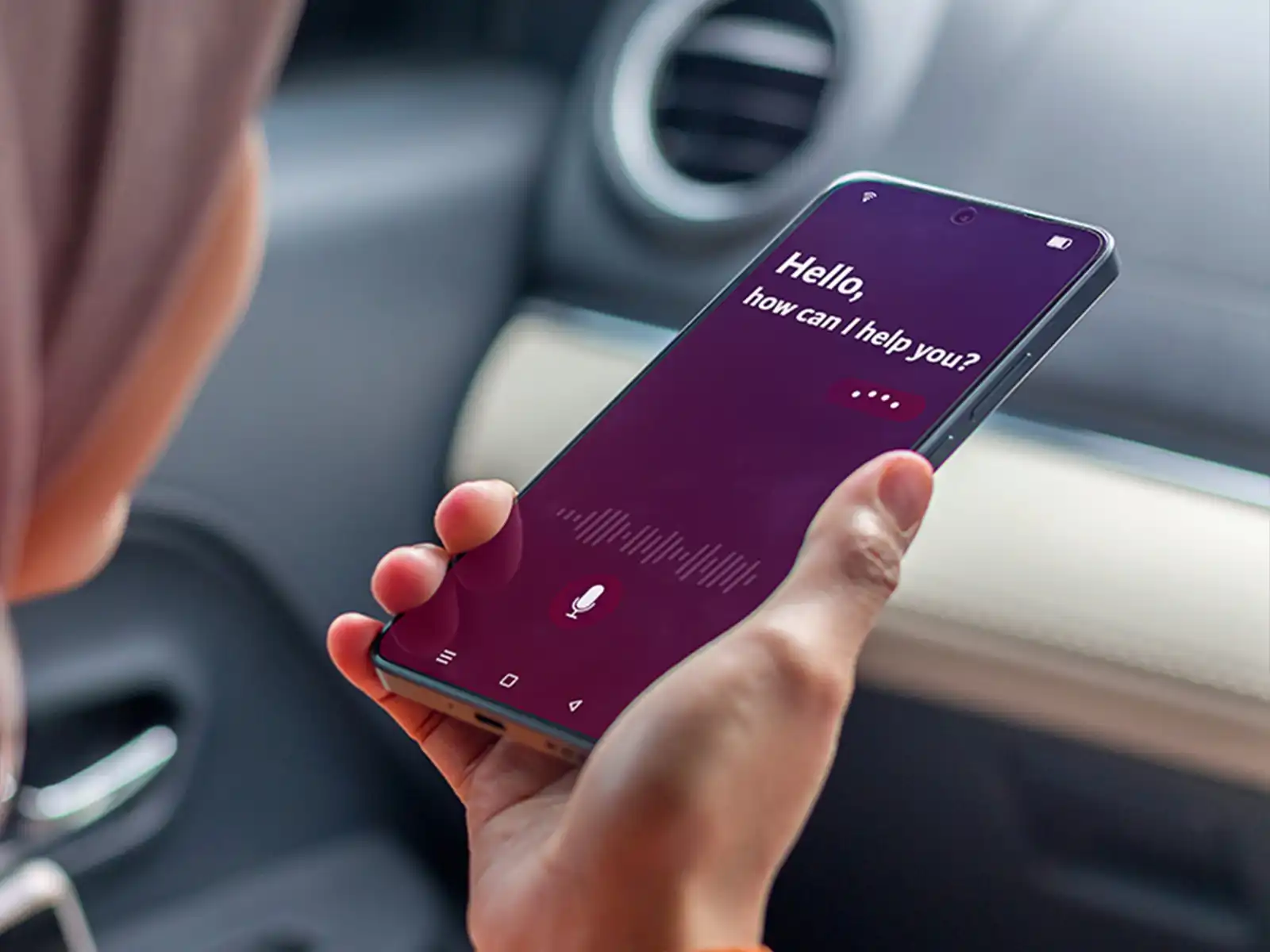
You can run a multilingual meeting without a human interpreter when AI interpreting fits the context. The platform handles real-time voice and captions. Participants join via mobile app or web. The meeting runs with no prior coordination.
This setup works when:
-
The meeting is internal or low-stakes: team syncs, project updates, internal trainings, all-hands sessions.
-
The topic carries no legal, medical, regulatory, or safeguarding consequences.
-
Participants understand they're using AI interpretation and the limits that come with it.
-
Content is structured or single-speaker, not rapid debate or charged negotiation.
Lia Live, Acolad's omnichannel interpreting platform, delivers AI interpreting in 80+ languages with sub-2-second latency. Access is via mobile app, web, or directly inside Microsoft Teams, Zoom, and Webex. The same platform connects to a qualified human interpreter when a meeting calls for one, with no provider switch.
When You Still Need a Human Interpreter
AI interpreting has hard limits. In regulated and high-stakes contexts, replacing a qualified interpreter with a machine isn't a cost optimization. It's a compliance risk.
You need a qualified human interpreter when:
-
The meeting touches healthcare, justice, asylum, immigration, or any regulated sector. The EU AI Act (2024) classifies AI use in healthcare and justice as high-risk and requires human oversight. Many public sector contracts prohibit machine interpreting outright.
-
Stakes are high: medical evaluations, legal proceedings, contract negotiations, board-level decisions, asylum hearings.
-
Errors carry liability: a mistranslated clause, a misunderstood symptom, a wrong figure in a financial disclosure.
-
Cultural nuance, tone, and non-verbal cues matter as much as the words.
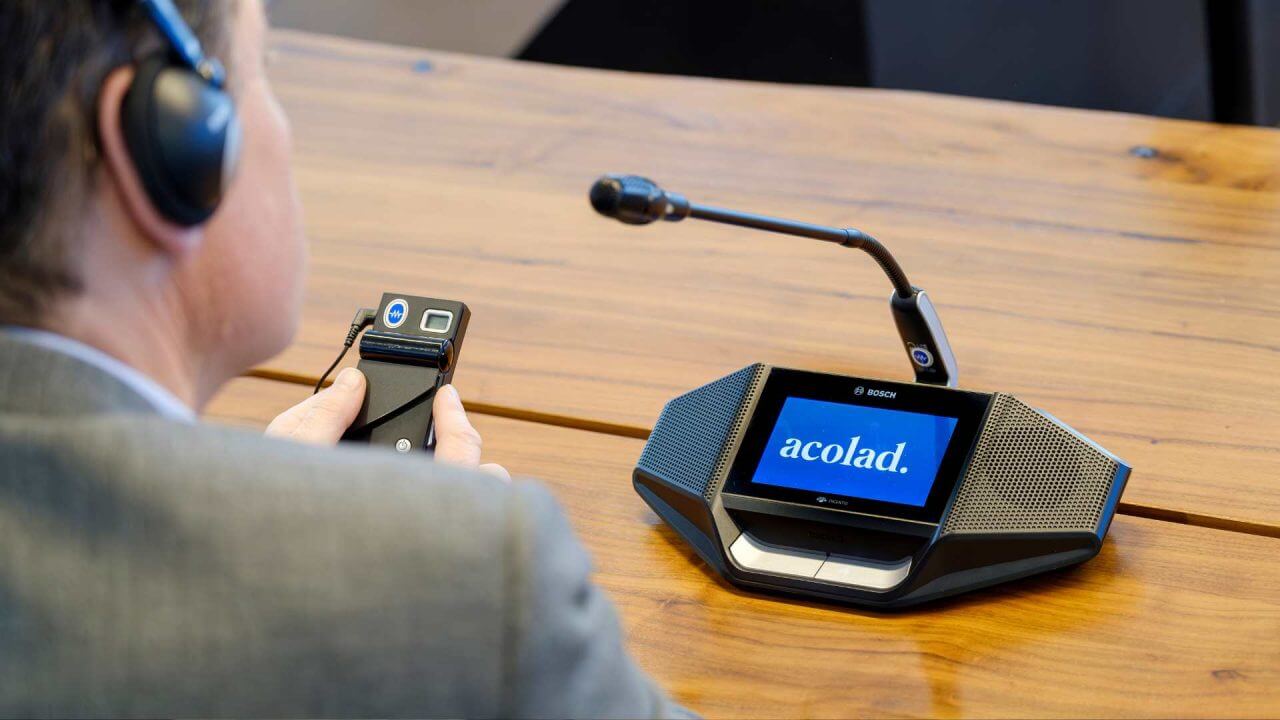
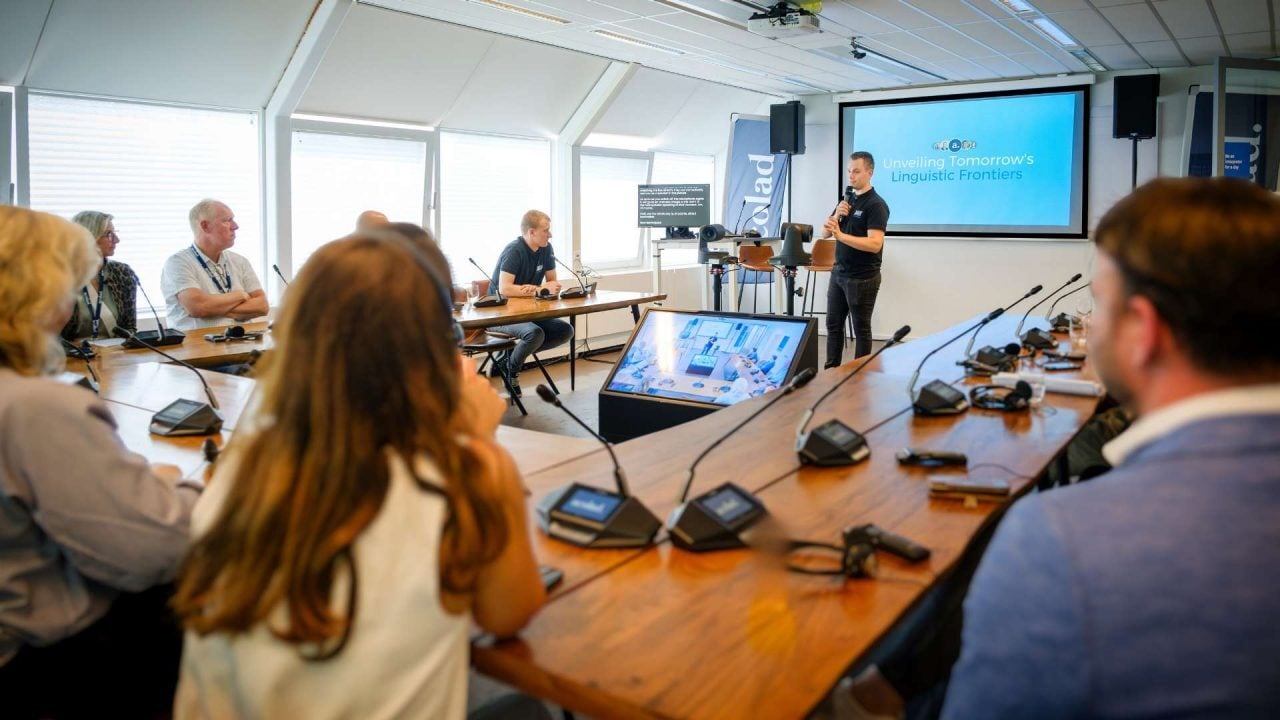
For these meetings, on-site interpreting, OPI, or VRI delivered by vetted, domain-certified interpreters is the standard. At UN Week, Acolad delivered interpreting across multiple sessions and languages for the United Nations General Assembly, a setting where AI alone could not have met the credibility and protocol requirements.
How to Choose the Right Setup in Three Questions
What are the stakes? If errors carry legal, medical, regulatory, or safeguarding consequences, default to a qualified human interpreter. If the meeting is internal and low-risk, AI works.
How often does this meeting happen? AI fits recurring operational meetings. Human interpreters fit strategic, one-off, or regulated sessions.
Who is in the room? Internal teams understand AI limits. External stakeholders, regulators, or vulnerable participants don't and shouldn't have to.
A clear rule beats a default. Using AI where a human is required costs far more than booking a human where AI would have worked.
Frequently Asked Questions
Can I run a multilingual meeting in Microsoft Teams or Zoom?
Yes. Modern interpreting platforms integrate with Microsoft Teams, Zoom, and Webex. AI interpreting runs as an additional channel inside the meeting. Human interpreters can also join remotely via the same platforms when a meeting calls for one.
How many languages can an AI interpreting platform support in one meeting?
Leading AI interpreting platforms now support 80+ languages simultaneously in a single session, with sub-2-second latency for voice and live captions.
Is AI interpreting accurate enough for business meetings?
For internal, structured, low-stakes business meetings, AI interpreting accuracy is generally acceptable. For high-stakes business meetings, contract negotiations, or any meeting where a mistranslation carries legal or financial consequences, a qualified human interpreter is the standard.
Can AI interpreting replace human interpreters entirely?
No. AI interpreting is a fit-for-purpose option for specific meeting types, not a replacement. Regulated sectors, high-stakes interactions, and meetings with cultural or legal nuance still require qualified human interpreters with human oversight built into the process.
How quickly can I set up AI interpreting for a meeting?
AI interpreting via a platform requires no pre-booking. Participants join via mobile app, web, or the conferencing tool used for the meeting. Setup is immediate for ad-hoc meetings, with optional glossary upload for industry terminology when scheduled in advance.
Do I need a separate provider for AI interpreting and human interpreters?
No. The operational standard is one platform that covers both, with a single contract and a single point of accountability. A clear path from AI to human interpreter when a meeting requires it removes coordination overhead and governance gaps.
Key Takeaways
-
A multilingual meeting setup is a fit-for-purpose decision based on stakes, audience, and frequency, not a default choice between AI and human.
-
AI interpreting platforms handle internal, low-stakes, recurring meetings in 80+ languages with sub-2-second latency, without pre-booking.
-
Qualified human interpreters remain the standard for regulated, high-stakes, or liability-sensitive meetings. The EU AI Act classifies AI use in healthcare and justice as high-risk.
-
Hybrid setups, combining AI as default with a managed human interpreter when needed, are the operational standard for organizations running multilingual meetings at scale.
-
One platform covering AI interpreting, OPI, VRI, and on-site interpreting under one contract removes vendor coordination and governance gaps.











.jpg)