2026-04-02

How Remote Simultaneous Interpreting Works: Technology, Human Expertise, and the Role of AI

Remote simultaneous interpreting delivers real-time multilingual communication without requiring interpreters on site. This article explains how RSI works, when it is the right fit for an event, and where AI can support coverage without replacing human expertise.

You're organizing a conference, a summit, or a large internal event. Speakers will present in multiple languages, and some of your attendees will simply be lost without interpretation. At that point, interpreting isn't really up for debate - what matters is how it gets delivered, by whom, and how much AI should be part of the equation. 

The Short Version

Remote simultaneous interpreting (RSI) is a method of conference interpreting where professional interpreters work from a remote location rather than an on-site booth. Participants receive interpretation in their chosen language through headsets or a dedicated app, in real time. The quality standard is the same as traditional simultaneous interpreting, provided the technical setup meets professional requirements.

How Remote Simultaneous Interpreting Works

When a speaker starts talking, that audio is captured and streamed - with near-zero latency - to interpreters who are working from professional, soundproofed booths anywhere in the world.

They listen through one ear while speaking the interpretation in real time into their microphone. That output is encoded, transmitted back through the platform, and delivered to your attendees through headsets or a mobile app, typically with less than a second of delay. From the delegate's perspective, it sounds and feels identical to traditional in-room interpreting.


The technical chain has several links: audio capture at the source, a stable internet connection, the RSI platform itself, and the final delivery to participants. Each one matters. Interpretation-grade audio has significantly stricter requirements than standard video conferencing - even minor signal degradation that you wouldn't notice on a Zoom call can make simultaneous interpreting impossible. This is why RSI setups usually include a dedicated audio feed from the venue's sound system rather than relying on a laptop microphone, and why live technical support during the event isn't optional.

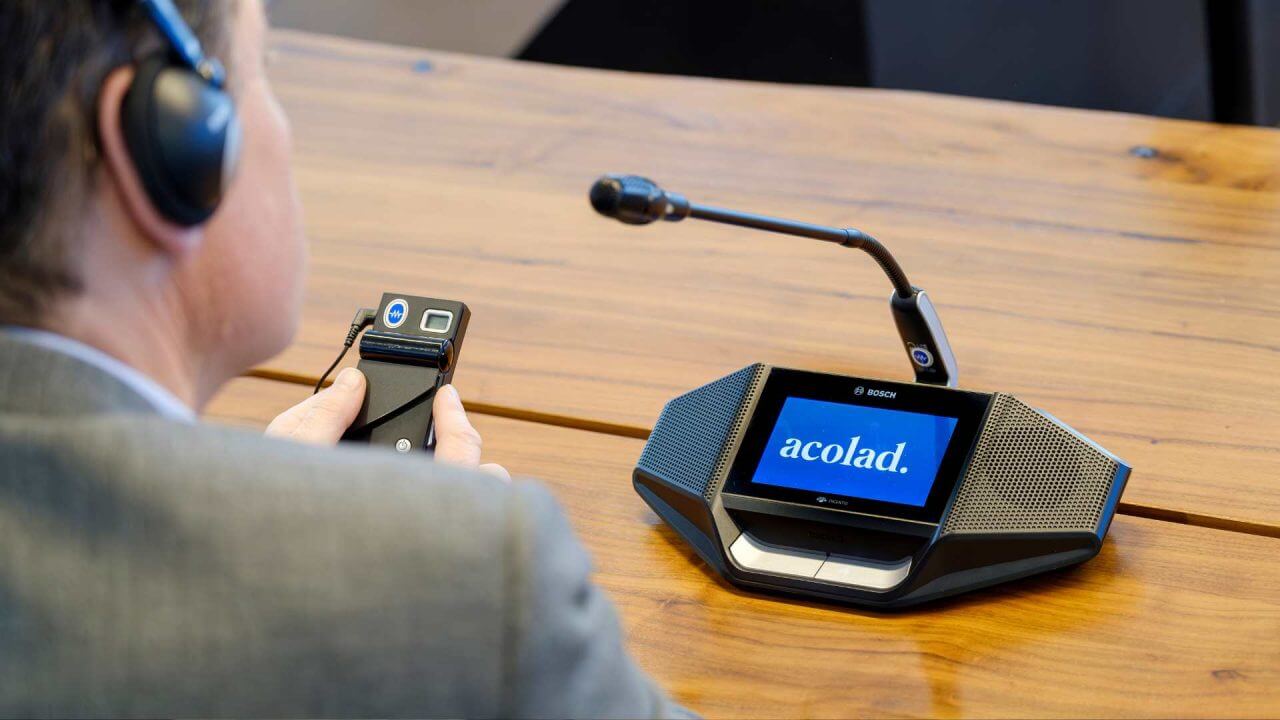
On the delegate side, dedicated headsets remain the most reliable option for high-profile events. They operate independently of personal devices, require no app or login, and work the moment someone puts them on - which matters when your attendees are focused on the content, not troubleshooting technology.

How to Decide Between On-Site Interpreting and RSI

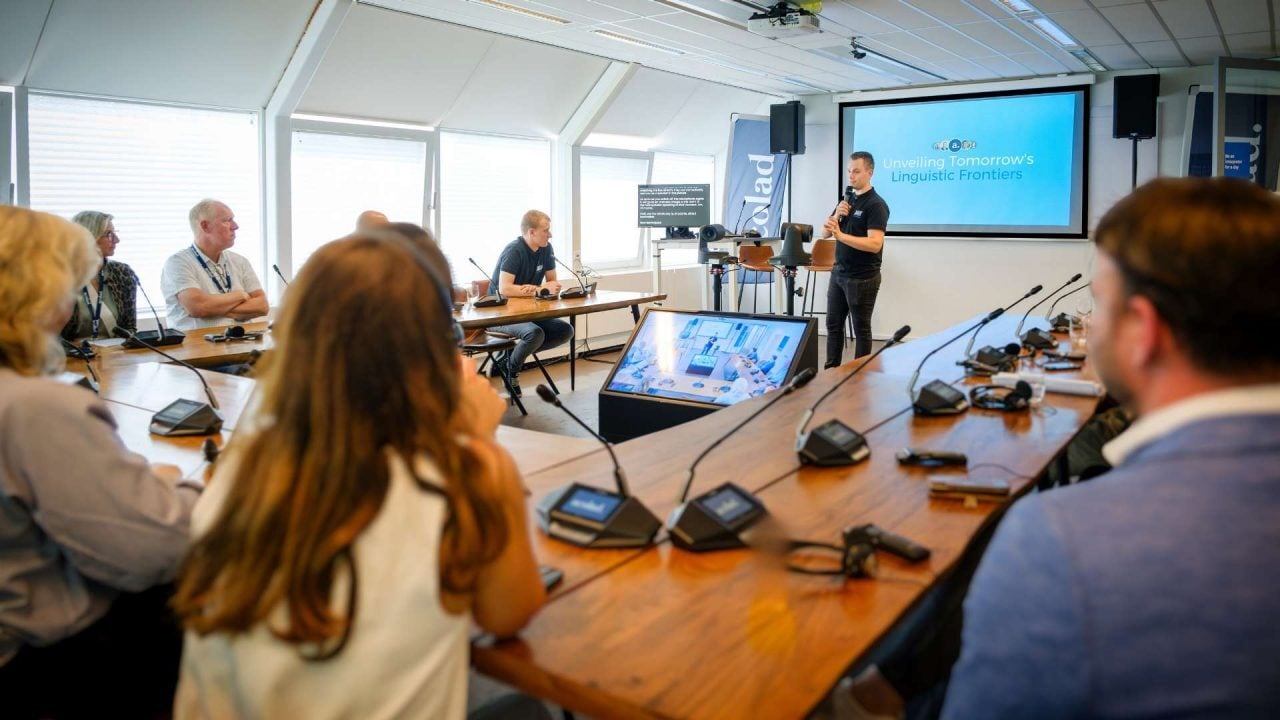
On-site interpreting means interpreters are physically present at the venue, working from soundproofed booths. RSI delivers the same output remotely. Both meet professional standards when the conditions are right. The decision between them depends on your event format, security requirements, and operational constraints.

If you are running a plenary session with a controlled stage setup and a stable audio feed, RSI is a strong fit. There are no booths to install, no on-site interpreter logistics to manage, and no equipment to ship. The cost is lower, the setup is faster, and when the conditions are right, your delegates will not notice the difference.

If your event involves sensitive negotiations, classified content, or contexts where confidentiality and physical presence are part of the protocol, on-site interpreting may be the more appropriate choice. The same applies to formats with unpredictable room configurations or variable audio environments.

In practice, most large-scale events use a combination of both. At COP30, Acolad managed hundreds of sessions across on-site and virtual environments simultaneously, with agendas changing in real time. The setup combined on-site interpreters, remote simultaneous interpreting, and AI-assisted tools depending on the session type and stakes involved. No single model covered every scenario.

Giulia Silvestrini, Head of Global Interpreting at Acolad, describes the approach in the Localization Today podcast: the starting point is always the intended outcome, and the methodology follows from there. Backup scenarios are designed and tested before the event, regardless of which delivery model is selected. 

Where AI Fits in a Modern Remote Simultaneous Interpreting Setup

AI doesn't replace remote simultaneous interpreting. It covers ground that RSI alone does not reach.

According to the Slator Pro Guide: AI in Interpreting, large-scale internal events are among the top AI adoption use cases in interpreting, with accelerating demand across pharmaceutical, technology, and manufacturing sectors. The same report notes that early concerns about AI displacing demand for human interpreters or RSI have not materialized.

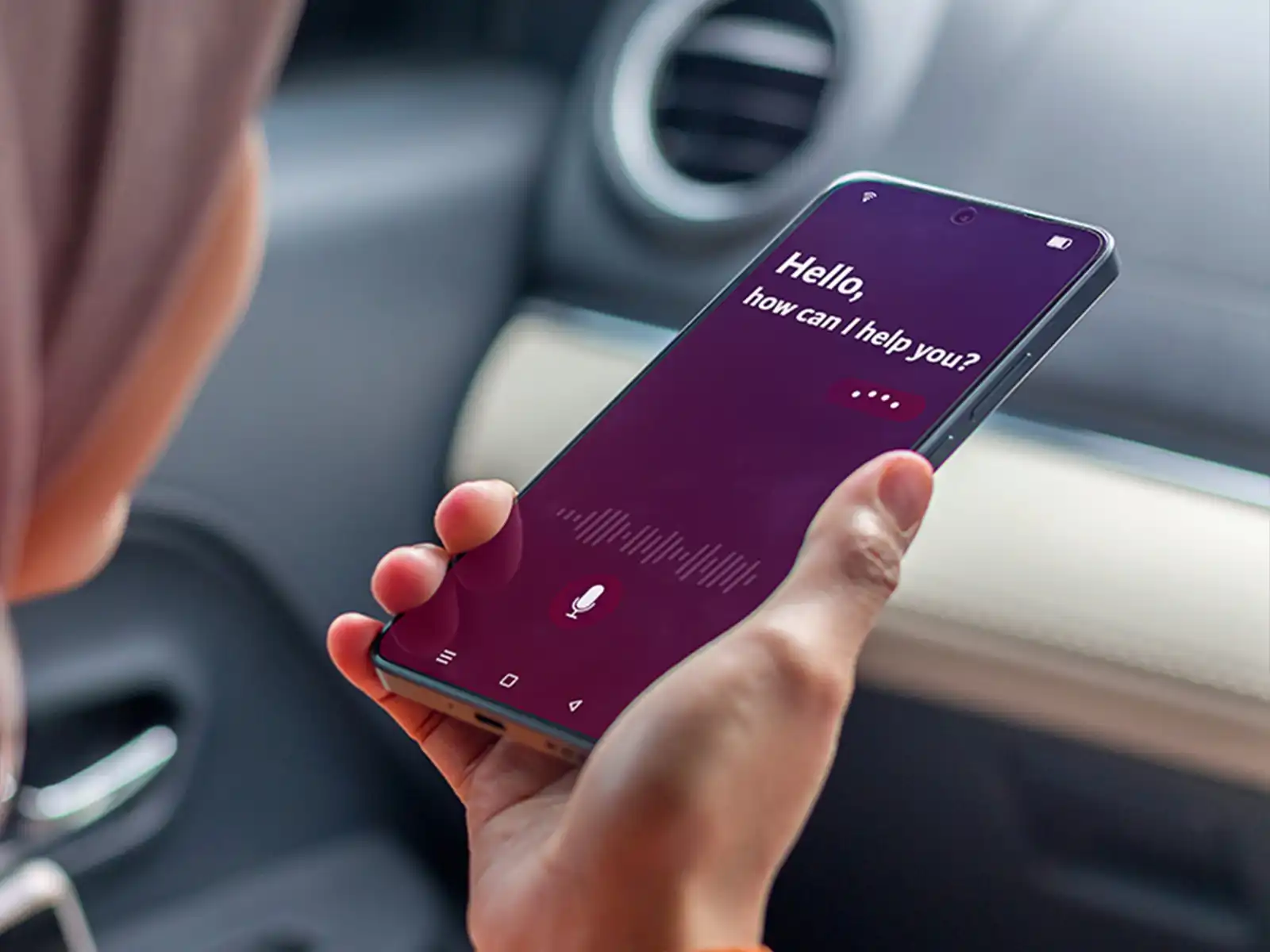
A second use case is live captioning alongside human interpretation. Live captioning refers to AI-generated subtitles delivered in real time, in parallel with professional interpretation. They add a visual accessibility layer for larger or hybrid audiences. The accuracy standard is lower than professional interpretation. The purpose is to help participants follow content, not to replace the primary channel.

One condition applies consistently: your attendees need to know what they are receiving. When participants understand upfront that AI output will not be perfect and know which channel is their primary reference, adoption is positive. Without that preparation, results are harder to manage. 

What to Verify Before Your Event

Whether you are planning RSI only, a human-AI combination, or a full hybrid model, the variables that determine quality are consistent across all three. A hybrid interpreting model combines human interpreters for primary or high-stakes sessions and AI-assisted tools for additional languages or lower-risk sessions such as breakout rooms. The conditions for success are the same regardless of the model chosen.

Before confirming your setup, run through these four points with your provider. They are where most issues originate, and none of them require technical expertise to check.

  • Audio feed: is it clean, stable, and tested with the interpreting platform before the event day?

  • Participant communication: does everyone in the room, including floor staff and session chairs, know how interpretation is being delivered?

  • Fallback plan: if something fails during a session, who does what, and has it been tested?

  • Full-chain accountability: does your provider own the entire delivery, from setup through live support, or are there handoffs between vendors?

If any of these are not confirmed before your event, the problem will not announce itself in advance. It will appear during your opening session. 

Key Takeaways

  • Remote simultaneous interpreting replaces the physical booth with a remote, soundproofed workstation connected to the event audio feed in real time.

  • Audio quality is the critical variable: interpreter-grade requirements are significantly stricter than for passive listeners.

  • RSI is the right fit for many event formats, but on-site interpreting remains preferable in certain regulated or high-sensitivity contexts.

  • AI extends RSI coverage through live captioning and breakout room access, but does not replace human interpretation in high-stakes sessions.

  • Testing, fallback scenarios, and clear participant communication determine whether a deployment succeeds.

colorful portraits of people surrounding the Acolad logo

Not Sure Which Interpreting Setup Fits Your Event?

Talk to an Acolad interpreting expert. We can help you map the right approach.

Related Resources