A localization platform helps teams manage multilingual content at scale with more control, consistency, and less manual coordination. This article explains what a localization platform does, how it differs from a TMS, and what to look for when evaluating one for enterprise use.
2026-04-02
What Does a Localization Platform Do, and Do You Need One?
If your localization program runs on a combination of translation tools, vendor emails, and manual coordination, it probably works well enough at low volume. The question most localization managers face at some point is whether that setup still holds as content volume grows, language count increases, and more internal teams depend on consistent multilingual output.
A localization platform is designed to answer that question with infrastructure rather than workarounds. It manages multilingual content workflows across formats, teams, and markets, from source ingestion to delivery, with quality governance and shared context built in across every project and every team.
What a Localization Platform Does
A localization platform centralizes three things that manual setups leave fragmented:
-
Workflow routing. Content is directed to the appropriate process based on type, risk level, and quality requirements. Routine content moves automatically. High-stakes content triggers human review.
-
Shared context. Translation memories, glossaries, and brand guidelines are persistent and applied consistently across all teams and all projects, not reconfigured each time. Every team works from the same reference, automatically.
-
Visibility and control. Localization managers see what is in progress, what is pending review, and what has been delivered, across all languages and markets, in one place.
The operational result is that teams spend less time managing handoffs and more time on decisions that require judgment.
How It Differs From a TMS
A Translation Management System (TMS) is built around the translation project: file handling, vendor assignment, workflow steps, and delivery. It manages translation as a discrete, bounded task.
A localization platform operates at a broader scope. It sits above the translation layer and handles what a TMS does not: content ingestion from source systems, automated routing across content types, quality governance at scale, and reporting across the full program. Some platforms combine both functions. Others are designed to extend an existing TMS rather than replace it.
The practical distinction matters when volume and complexity increase. A TMS manages projects. A localization platform manages a program.

What to Look For When Evaluating a Localization Platform
Four criteria that consistently determine whether a platform delivers at enterprise scale:
-
Workflow flexibility. Can the platform handle both automated and human-reviewed content without requiring separate tools or manual routing decisions? Without this, teams end up maintaining parallel processes as content complexity grows.
-
Shared context management. Are translation memories, glossaries, and brand guidelines persistent and shared across teams, or does each project start from a local setup? Inconsistent context is one of the most common sources of brand and terminology drift at scale.
-
Integration depth. Does the platform connect directly to the systems where content is created and managed, or does every project start with a manual file export? Every manual handoff is a point of friction, delay, and version risk.
-
Delivery model. Does it support both self-serve execution for high-volume, lower-risk content and managed delivery for complex or regulated projects? Teams that can only choose one mode end up routing everything the same way, regardless of content risk.
AI-Powered Localization Platforms
AI-powered localization platforms are not simply faster translation engines. The distinction that matters for enterprise use is governance: how context is applied, how human expertise is embedded, and how quality is controlled across the full workflow, not just at the output level.
On context: a well-designed AI localization platform applies shared terminology, translation memory, and brand guidelines automatically and persistently across all content and all teams. This is not prompt-based configuration. It is context that is enforced by default, at scale.
On human expertise: human review in a governed AI platform is selective and operationalized, not a blanket safety net. High-confidence segments are approved automatically. Review depth is adjusted based on content criticality. Every action is tracked. The result is fewer human hours overall, with oversight concentrated precisely where content risk requires it.
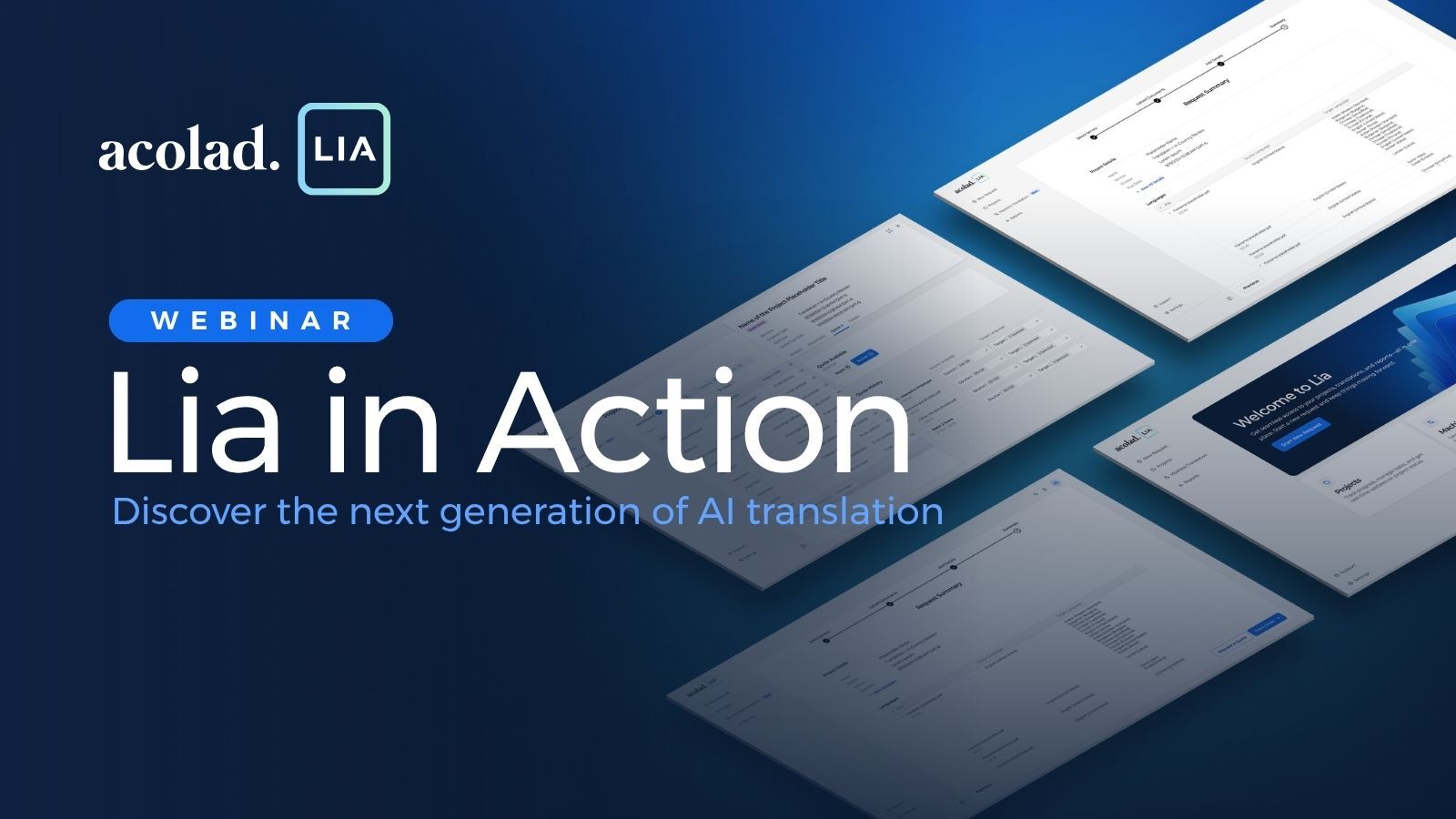
Lia, Acolad's AI-powered multilingual platform, is built on this model. It combines automated translation with embedded governance and selective expert review, available as a self-serve solution (Lia Go) for speed and autonomy, or as a managed service (Lia Services) for complex, high-stakes, or regulated content.
Key Takeaways
-
A localization platform manages multilingual workflows at program level, not just individual translation projects.
-
Shared context (translation memories, glossaries, brand guidelines) is persistent and applied automatically across all teams, not reconfigured per project.
-
The difference from a TMS is scope: a localization platform handles the full content lifecycle, not just the translation step.
-
AI-powered platforms govern context and human review by design, not through manual configuration or generic prompts.